
Opera Garnier Audio Guide 2026: Languages, Cost, What It Covers & Is It Worth It?
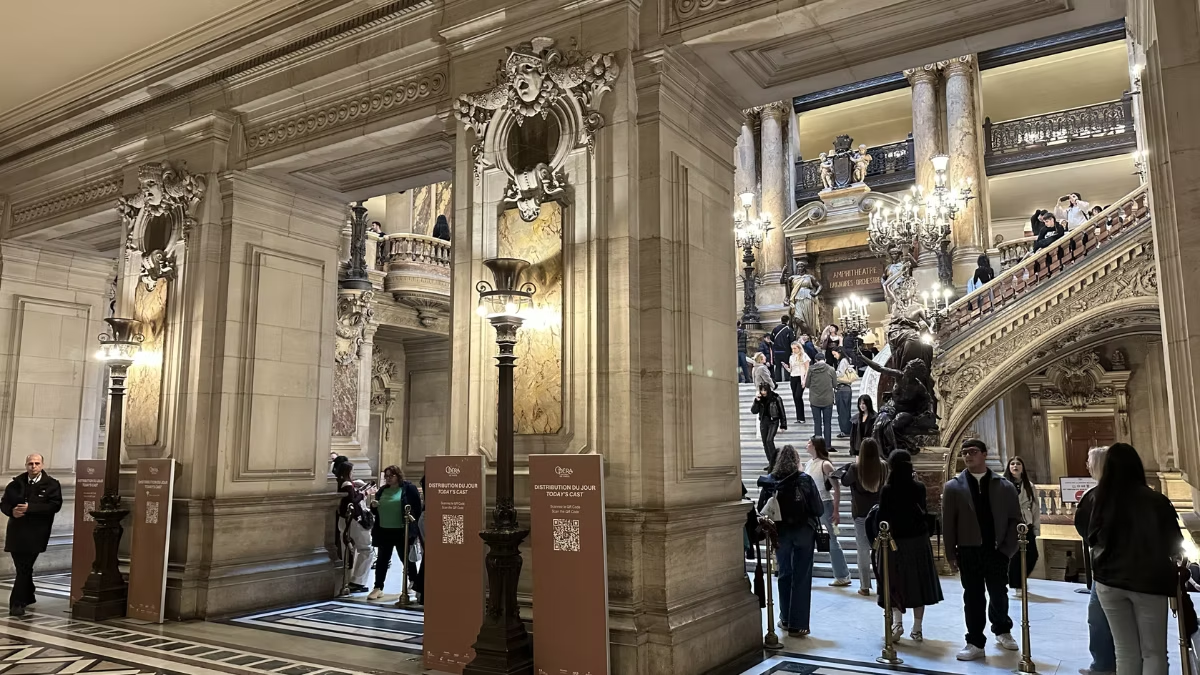
The Opera Garnier audio guide costs approximately €5–€6 to hire on-site, or is included in the self-guided tour ticket (~€16–€18 total with entry). It’s available in at least 9 languages including English, French, German, Spanish, Italian, Portuguese, Japanese, Mandarin, and Korean. The guide covers all major spaces — Grand Staircase, Grand Foyer, auditorium, and library-museum — with narration on architecture, history, and Phantom of the Opera connections. For first-time visitors, it is strongly recommended: the building’s interiors are rich with stories that the physical space alone doesn’t tell.
The Opera Garnier audio guide occupies an interesting position in the Paris audio guide landscape. Most major Paris attraction audio guides are useful but optional supplements — the Eiffel Tower, the Sacré-Cœur, even parts of the Louvre work well without them. Opera Garnier is different. The building’s interior is contextually dense in ways that genuinely reward narration: the allegorical ceiling programme of the Grand Foyer, the specific marble choices in the staircase, the political meaning of the building’s commission, the Phantom mythology embedded in real architectural features. Without some form of interpretive content, first-time visitors often find the building beautiful but somewhat opaque.
The audio guide is the lowest-cost solution to that opacity. This article covers everything you need to know before hiring one.
How to Get the Audio Guide
There are two ways to access the Opera Garnier audio guide:
Option 1: Book It Pre-Included (Recommended)
The Opera Garnier Private Guided Tour bundles entry and audio guide into a single pre-paid package at approximately €16–€18 for adults. The audio guide is pre-arranged — on arrival at Opera Garnier, present your ticket at the audio guide desk and collect your device without additional payment. No queuing separately to pay, no risk of guides being unavailable in your language.
This option is marginally cheaper than buying entry separately and hiring the audio guide on-site (which would cost approximately €14 + €6 = €20), and removes the friction of the separate on-site hire process.
Option 2: Hire On-Site
Hire the audio guide at the audio guide desk inside the visitor entrance on arrival. Cost approximately €5–€6 per device. You will need to have already booked a separate entry ticket — the on-site hire does not include entry.
Practical considerations: The desk is staffed during all visitor hours. Language availability is broad, but if you require a less common language, confirm availability in advance. The device is a physical unit, not a smartphone app — keep it safe during your visit and return it at the audio guide desk when you leave.
Languages Available
The Opera Garnier audio guide is available in at least the following languages: French, English, German, Spanish, Italian, Portuguese, Japanese, Mandarin (Simplified Chinese), and Korean. Additional languages may be available — check with the audio guide desk on arrival or confirm via the listing when booking. Language selection is made when you collect the device.
If your preferred language is not on the standard list, contact the Paris Opera in advance ([email protected]) to confirm availability. For rarer languages, the private guided tour in your language may be a more reliable solution than relying on an audio guide device.
What the Audio Guide Covers
The audio guide is structured as a series of numbered stops corresponding to specific locations in the building. You activate each stop when you arrive at the relevant space. Content is approximately 3–8 minutes per stop. Full listening time across all stops is approximately 90 minutes — used selectively, it fits comfortably within a 1.5-hour visit.
Grand Staircase (3–4 stops)
The staircase narration covers the architectural programme in detail: the seven marble varieties used (Garnier sourced them from across France, Italy, and Algeria — each chosen for specific colour and vein characteristics), the sculptural groups on either side, the glass ceiling that fills the space with natural light, and the social function of the staircase in 19th-century opera culture — not merely a transit space but a theatre in itself, where the audience performed for each other before the curtain rose.
The Loggia and Exterior Spaces (1–2 stops)
Brief narration on the exterior programme visible from the loggia, the sculptural groups on the facade, and the rooftop Apollo sculpture. Useful orientation before heading into the main Foyer.
The Grand Foyer (3–5 stops)
The most content-rich section of the guide. Stops cover: the overall spatial ambition (Garnier’s explicit reference to the Hall of Mirrors at Versailles), the ceiling painting programme (each allegorical figure identified and explained), the gilded pilasters and their decorative vocabulary, the mosaic floor, and the social history of the foyer as the principal promenade space of Belle Époque Parisian society.
This is the section where the audio guide adds the most value. The Grand Foyer looks spectacular without narration; with narration, it becomes legible — every element is intentional and every intention is explicable.
The Auditorium (2–3 stops)
The auditorium narration covers the horseshoe seating layout and its acoustic rationale, the original ceiling design (painted by Paul Baudry in 1874), the 1964 Chagall commission and the controversy surrounding it (the cultural minister André Malraux commissioned a living modernist artist to paint a new ceiling in a 19th-century neo-Baroque interior — the decision was not universally welcomed), and Chagall’s compositional approach — the 14 operatic scenes arranged around the central chandelier.
The chandelier narration is particularly strong. The guide covers the chandelier’s specifications (6.3 tonnes of bronze and crystal, 340 light bulbs), the mechanism that allows it to be raised and lowered for maintenance, and the 1896 counterweight accident — in which the mechanism failed and a counterweight fell into the auditorium, killing one person. This incident, reported in the press at the time, was the real event that Gaston Leroux later transformed into the chandelier-crash scene in Le Fantôme de l’Opéra.
The Phantom Mythology (integrated throughout)
Rather than a single stop, the Phantom content is woven through the auditorium and loggia narration — Box 5 is identified and its Phantom connection explained when you can see it from the auditorium; the underground lake is described from the relevant vantage point. This integration is one of the audio guide’s more effective choices — the mythology lands best when it’s tied to the specific space being discussed rather than presented as a separate chapter.
The Library-Museum (2–3 stops)
The bibliothèque narration covers the scope of the collection (over 600,000 documents), the costume and set model collection, significant performance archives, and the history of the Paris Opera Ballet’s connection to this building. For visitors with a specific interest in ballet history or performance costume, this section is particularly rich.
Is the Audio Guide Worth It?
The Opera Garnier audio guide is worth it for first-time visitors — the building’s interiors are contextually dense enough that some form of interpreted content significantly improves the experience. The audio guide adds approximately €5–€6 to the cost of a bare entry ticket, or is included in the self-guided tour ticket for ~€16–€18 total. That premium is worthwhile given the depth it adds. For return visitors or architecture-literate visitors with prior knowledge of the building, the audio guide adds diminishing returns.
Worth it if:
- This is your first visit to Opera Garnier
- You’re unfamiliar with the building’s history, architect, or Phantom mythology
- You prefer to set your own pace rather than follow a group
- You’re a solo traveller for whom a private guided tour is not cost-effective
- You’re visiting with a partner who prefers independent exploration
Less necessary if:
- You’ve visited before
- You’ve done substantial background reading on Garnier and the Second Empire
- You’re an architecture professional who prefers unmediated observation
- You’re planning to book a private guided tour (which supersedes the audio guide in all respects)
Audio Guide vs Private Guide: The Key Differences
| Audio Guide | Private Guided Tour | |
|---|---|---|
| Cost | ~€5–€6 (+ entry) | ~€35–€50/person (entry included) |
| Responsiveness | Fixed script | Adapts to your questions and interests |
| Pace | Entirely yours | Guide-set (though adjustable) |
| Phantom content | Good — covered at relevant stops | Excellent — delivered live at the right moment |
| Language options | 9+ languages | English primarily (via listed tour) |
| Group experience | Individual | Shared — better for families, couples |
| Best for | Solo visitors, independent travellers | First-timers, families, groups |
For a full comparison, see our self-guided vs guided article.
Practical Tips for Using the Audio Guide
Don’t try to listen to every stop. The full guide content at every stop would take 90 minutes of near-continuous listening. Use the guide selectively — listen fully at the Grand Foyer and auditorium (the highest-content sections), skim or skip at spaces that interest you less.
Pause and look before moving on. After each narration stop, remove the earpiece and look at what you’ve just been told about. Let the information connect to the visual experience before pressing play again. The audio guide tells you what to see; you still need to do the seeing.
The Phantom stops are worth every minute. If you’re visiting because of Gaston Leroux’s novel or the Lloyd Webber musical, prioritise the auditorium and chandelier narration stops. These deliver the building-to-fiction connection most vividly.
Return the guide before exploring the gift shop. The audio guide desk is near the exit — return the device there before visiting the shop so you’re not managing it while browsing.
Frequently Asked Questions
How much does the Opera Garnier audio guide cost?
The audio guide costs approximately €5–€6 to hire on-site at the audio guide desk. It is included (with no additional on-site payment) in the self-guided tour ticket, which costs approximately €16–€18 for adults including entry — making it marginally cheaper than booking entry separately and hiring the guide on arrival.
What languages is the Opera Garnier audio guide available in?
The audio guide is available in at least French, English, German, Spanish, Italian, Portuguese, Japanese, Mandarin, and Korean. Select your language when collecting the device at the audio guide desk. For languages not on this list, contact the Paris Opera in advance to confirm availability.
Is the Opera Garnier audio guide a physical device or a smartphone app?
It is a physical handheld device collected at the audio guide desk on arrival. It is not a smartphone app. Keep it safe during your visit and return it at the end. If you prefer an app-based alternative, third-party Opera Garnier audio guide apps exist for smartphones, but the official on-site device is the most comprehensively curated option.
Can I use my own headphones with the Opera Garnier audio guide?
Check with the audio guide desk on arrival — some devices accommodate standard 3.5mm headphone jacks; others use integrated earbuds. If sound quality is important to you, it’s worth enquiring.
Does the audio guide cover the Phantom of the Opera mythology?
Yes — the Phantom connections are woven through the auditorium narration stops. Box 5, the chandelier, the underground lake, and the 1896 counterweight accident are all covered in the context of the spaces where they’re most relevant. It is one of the audio guide’s more effective content choices.
