
The Underground Lake at Opera Garnier: Real History & Phantom Mythology (2026)
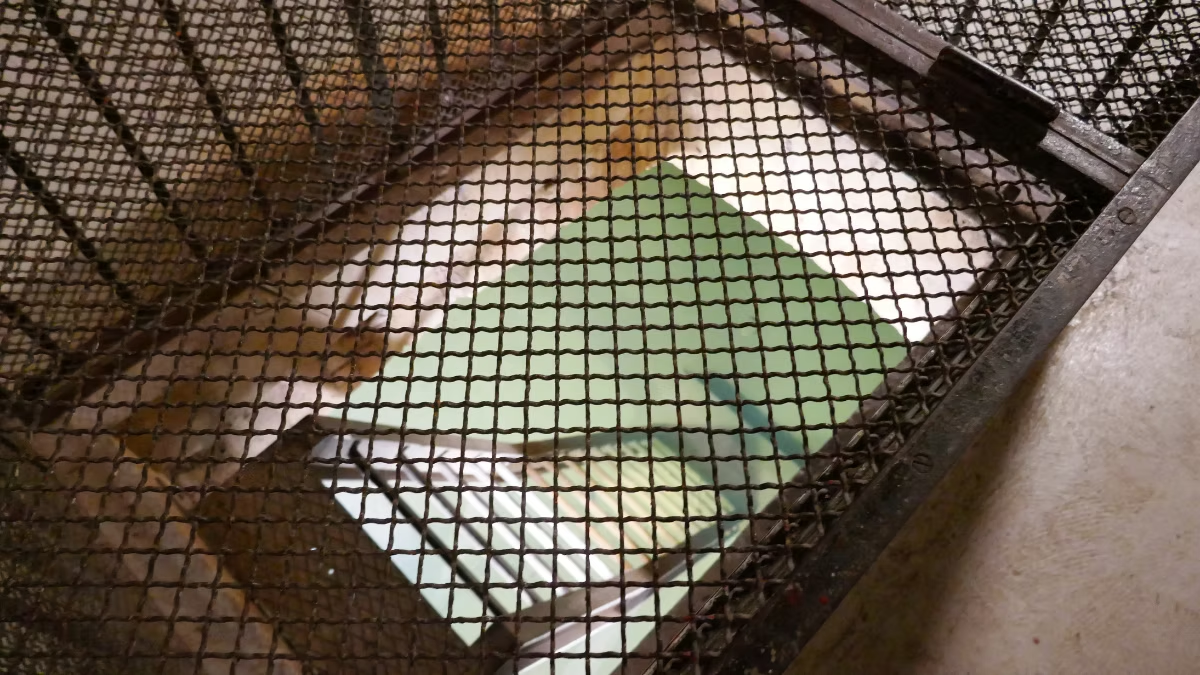
Yes — the underground lake at Opera Garnier is real. It is a large artificial reservoir beneath the building, created during construction (1861–1875) when engineers pumped out groundwater from the marshy subsoil and then lined the excavated cavity to retain water as a structural counterweight. The lake occupies much of the building’s lowest sub-basement level, approximately five floors below the stage. It cannot be visited directly. Gaston Leroux used it as the setting for the Phantom’s subterranean lair in his 1910 novel — one of the most famous fictionalisations of a real architectural feature in literature.
The underground lake is one of the best-documented “is that real?” answers in Paris tourism. Visitors who have read Leroux’s novel or seen the Lloyd Webber musical arrive at Opera Garnier wondering whether the lake is a fiction. It isn’t. The lake exists. You are walking above it right now. It is approximately five floors beneath the stage, it holds a permanent body of water, and it is the real thing that inspired one of the most famous scenes in 20th-century musical theatre.
What Leroux invented was the man living on it.
The Real History: How the Lake Was Created
The underground lake at Opera Garnier was created during construction between 1861 and 1875. The building sits on marshy subsoil in what was historically a flood-prone area of Paris near the Seine. When engineers excavated the foundations, they struck a continuous groundwater table that flooded the site repeatedly. After multiple failed attempts to drain the subsoil permanently, the engineers — led by Charles Garnier’s chief engineer — made a counterintuitive decision: instead of fighting the water, they would retain it. They lined the excavated cavity with concrete walls, allowed the groundwater to fill the enclosed space, and used the resulting reservoir as a structural stabiliser — the water pressure from outside balancing the weight of the building above from inside. The lake is approximately 55 metres long, 35 metres wide, and 3 to 4 metres deep.
The 1860s were a period of intense subterranean activity in Paris — Haussmann’s grands travaux included extensive sewer construction, the early metro lines were being planned, and every major construction project in central Paris was encountering the city’s complicated geological profile. Opera Garnier’s site, near the former course of the Grange-Batelière stream, was particularly problematic.
The engineer’s decision to retain the water rather than drain it was genuinely innovative. The lake acts as a hydraulic cushion — the water table is in equilibrium with the building’s weight above, preventing the subsidence that affected many neighbouring buildings during the same construction period. The decision worked: Opera Garnier has experienced no significant structural settling in 150 years.
The lake was subsequently divided into two sections separated by a concrete pier. The larger section (the cistern, used as a water reservoir for fire-fighting purposes in the building’s early decades) and the smaller section (the navigable water area that Leroux’s novel dramatises). Fish have reportedly been kept in the lake at various points in the building’s history — a detail that Leroux was apparently aware of.
The Lake Today
The lake is maintained as a permanent feature of the building’s infrastructure. It continues to function as a hydraulic stabiliser. The Paris Fire Brigade has access to it as a water source for the building’s fire suppression systems, though modern firefighting infrastructure has largely superseded this use.
The lake is also home to a small colony of fish — reportedly put there by a former building manager in the early 20th century and maintained through subsequent generations. This detail, more than any other, seems to satisfy visitors who are looking for confirmation that the lake is truly, inexplicably real rather than merely functionally necessary.
Can you visit the lake? No. The lake is not accessible to visitors, whether on standard entry tickets, private guided tours, or any other commercially available experience. It is an operational part of the building’s infrastructure located in restricted utility spaces below the stage level. Even the building’s own staff have limited access.
This inaccessibility is, paradoxically, what preserves its mythology. The lake you cannot visit is more compelling than a lake you could tour.
The Phantom Connection
Gaston Leroux’s 1910 novel Le Fantôme de l’Opéra uses the lake as the Phantom’s residence. Erik — the Phantom — lives on an island in the underground lake, reached by a small boat through the building’s subterranean passages. His house is on this island; his pipe organ is in his house; the woman he loves is brought to the island against her will.
Leroux was a former journalist who researched Opera Garnier obsessively before writing the novel. He was aware of the lake’s existence from records and from conversations with building staff. In the novel he gives it a specificity — the moss on the walls, the dark water, the sound of the boat crossing — that clearly derives from actual description rather than pure invention.
What Leroux invented: the island, the house, the organ, the Phantom himself.
What Leroux used from reality: the lake’s existence, its location beneath the building, its dark and inaccessible character, the building’s genuine labyrinthine sub-basement structure.
The result is one of the most successful fictionalisations of a real place in all of literary history. Every visitor who has read Leroux or seen the Lloyd Webber musical and then stands in Opera Garnier’s auditorium knowing that there is a real lake directly beneath them is experiencing the work of a very skilled novelist.
See our full Phantom of the Opera article for a complete real-versus-fiction breakdown of all the building’s Phantom connections.
The Lake in the Building’s Seven Levels
Opera Garnier extends seven levels below street level — one of the deepest building footprints in central Paris. The levels descend as follows from the stage floor:
- Level -1: Understage machinery, trap mechanisms, storage
- Level -2: Deeper machinery, dressing room overflow, additional storage
- Level -3: Technical infrastructure, cabling, ventilation
- Level -4: Foundational structure, concrete piers
- Level -5: The lake level
The depth means that the lake is approximately 15 metres below the stage floor and 20 metres below street level. This is a meaningful physical fact — standing in the auditorium and knowing that there is water twenty metres directly below you is the kind of information that changes how a space feels.
Visiting Opera Garnier Knowing the Lake Is Real
The lake cannot be seen on any standard visit. But knowing it exists changes several things about the visit:
In the auditorium: You are sitting above seven levels of increasingly mysterious sub-basement, the lowest of which contains water. This is the correct way to think about Box 5 and the chandelier — they are surface details of a building with enormous physical depth below them.
In the loggia: The building’s external footprint — much larger than the public interior suggests — encompasses all seven sub-basement levels. The building extends downward as dramatically as it extends upward.
On the Grand Staircase: Garnier was building above a lake. The technical achievement of constructing this baroque extravagance above a controlled groundwater reservoir is genuinely impressive, and the staircase’s marble excess reads differently knowing the engineering heroics required beneath it.
Frequently Asked Questions
Is the underground lake at Opera Garnier real?
Yes. The underground lake is a real body of water beneath the Palais Garnier, created during construction in the 1860s–1870s when engineers retained groundwater rather than draining it. It occupies much of the building’s lowest sub-basement level and continues to function as a hydraulic stabiliser. It is not accessible to visitors.
Can you visit the underground lake at Opera Garnier?
No. The lake is located in restricted infrastructure areas below the stage level and is not accessible on any standard or premium visitor ticket. No tour includes access to the lake. Its inaccessibility to visitors has been the case since the building’s opening in 1875.
How deep is the underground lake at Opera Garnier?
The lake is approximately 3 to 4 metres deep, roughly 55 metres long and 35 metres wide, and located approximately five levels (around 15 metres) below the stage floor. It was created by retaining groundwater in a concrete-lined excavation during the building’s construction.
Is the Phantom of the Opera lake real?
The lake used as the setting for the Phantom’s lair in Gaston Leroux’s 1910 novel is based on the real underground lake beneath Opera Garnier. Leroux researched the building extensively and was aware of the lake’s existence. What he invented was the island, the house, the organ, and the Phantom himself — the lake he fictionalised rather than fabricated.
Are there fish in the underground lake?
Reports of fish in the underground lake have circulated for much of the building’s history. A former building manager reportedly introduced fish in the early 20th century, and the colony has reportedly been maintained since. The Paris Fire Brigade, which has access to the lake for fire suppression purposes, has confirmed the fish’s presence. It is one of those facts about Opera Garnier that seems impossible but is apparently true.
