
Photography Rules at Opera Garnier 2026: What’s Allowed & What Isn’t
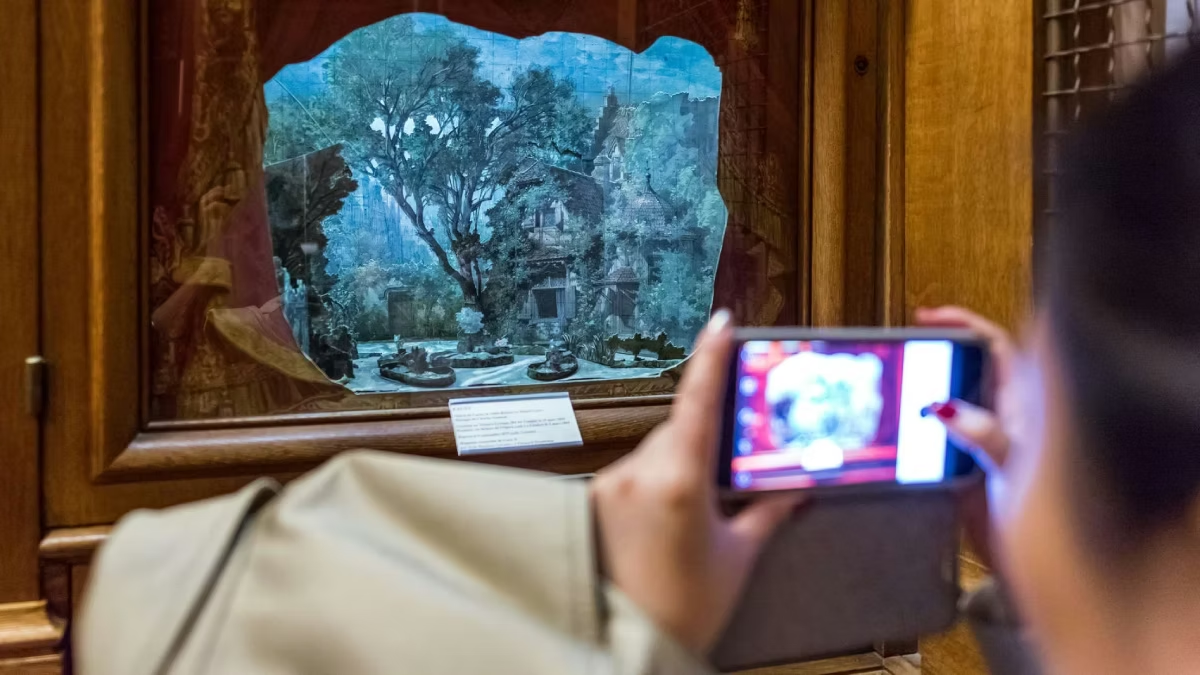
Personal photography is allowed throughout most of Opera Garnier during daytime visits — including the Grand Staircase, Grand Foyer, and auditorium. Flash photography is not permitted anywhere in the building. Tripods and selfie sticks are prohibited. Some temporary exhibition spaces may restrict photography. There are no photography restrictions on the exterior or on Place de l’Opéra itself. The building is one of the most photogenic interiors in Paris, and most visitors leave with extraordinary shots using nothing more than a smartphone.
Opera Garnier is, among other things, one of the most photograph-worthy interiors in Europe. Charles Garnier designed the building to be experienced through spectacle — and spectacle translates beautifully to a camera. The good news is that the rules are permissive: you can photograph almost everything, with a small number of common-sense restrictions. The even better news is that you don’t need specialist equipment to get excellent results here.
What You Can Photograph
Personal photography is permitted throughout the main visiting areas of Opera Garnier, including the Grand Staircase, Grand Foyer, auditorium (when open), the loggia, and the library-museum. Flash is prohibited throughout the building. Tripods and selfie sticks are not allowed. Commercial photography and filming require advance permission from the Paris Opera. For personal and social media use, you are free to photograph and share images from all standard visiting areas.
Grand Staircase: Fully open to photography. The staircase is the most photographed interior element and is lit beautifully — natural light comes through the glass ceiling. The best angle is from the base looking up towards the landing, or from the upper landing looking down over the balustrade.
Grand Foyer: Photography freely permitted. The length of the room — 54 metres — means you can capture wide shots from either end that convey the full scale of the gilded interior. The window bays on the south wall create natural light pools that give warm, flattering illumination throughout the day.
The Auditorium: Photography is permitted when the auditorium is open to visitors. The Chagall ceiling is the primary subject — photograph it from any position in the stalls or the first circle. The chandelier, the boxes, the curtain, and the overall horseshoe form of the room are all legitimate subjects. Note that the auditorium is sometimes closed due to rehearsals; see our opening hours guide for how to check in advance.
The Library-Museum: Photography is permitted in the permanent collection and display areas. Temporary exhibition spaces within the library-museum may post their own photography restrictions — look for posted signage.
Exterior and Place de l’Opéra: No restrictions at all. The exterior of Opera Garnier, including the facade, the sculptural programme, and the rooftop (from a distance), can be photographed freely. The best exterior shots are from the south end of Avenue de l’Opéra looking north — the building fills the frame at the end of the boulevard.
What Is Not Permitted
Flash photography: Flash is prohibited throughout the entire building, without exception. This applies to all camera types including smartphones (turn off auto-flash before entering). Flash can damage gilded and painted surfaces over time, and the building’s lighting is calibrated for ambient photography anyway — flash typically makes your images worse, not better.
Tripods: Not permitted inside the building. They create obstructions in narrow spaces and are considered professional equipment requiring advance authorisation. Leave your tripod at the hotel.
Selfie sticks and monopods: Not permitted. The same obstruction logic applies, and they present a risk to other visitors and to the building’s decorative surfaces in tight spaces.
Commercial photography and filming: Any photography intended for commercial use — advertising, editorial publication, film or video production — requires a filming permit issued in advance by the Paris Opera’s communications department. Permit requirements and fees apply. This restriction does not affect personal photography, travel blogging, or social media posting.
Photography during performances: If you attend an evening performance, photography during the performance itself is strictly prohibited (phones must be switched off or silenced). Photography in the foyers and public spaces before and during intervals is generally permitted.
Best Spots for Photography
Grand Staircase: Three Key Angles
From the base looking up: Position yourself at the foot of the main staircase, centred on the upper landing. Use a moderately wide angle. The sweep of the double staircase, the bronze lamp-holders on either side, and the light from the glass ceiling above create a naturally composed shot.
From the upper landing looking down: After climbing, turn and look back down. The spread of the marble steps, the crowd below, and the chandeliers create a layered depth that photographs well in portrait orientation.
From the side galleries: The loggias running along either side of the staircase offer oblique angles that capture the staircase’s baroque profile — useful for avoiding the crowds that cluster at the foot.
Grand Foyer: Use the Golden Hour Effect
The Grand Foyer’s south-facing windows create warm light throughout the day that becomes particularly beautiful in the late afternoon (15:00–16:00). If you can arrive for the last hour of visiting, the light quality in the Foyer is noticeably better than at midday. Shoot from the ends of the room for full-length shots, or get close to the gilded pilasters and painted ceiling panels for detail work.
Auditorium: Look Up
The Chagall ceiling is the shot. Photograph it from a position near the centre of the stalls, looking directly upward. A smartphone in portrait mode, tilted back, captures the ceiling’s colour field effectively. For the chandelier, pull back further to get the full six-tonne mass in frame — it’s larger than most visitors expect.
The Exterior at Golden Hour
For exterior shots, the best light falls on the main facade in the early morning (before 09:30) when the sun is low in the east and before the tour groups arrive. The late afternoon (16:00–17:00) provides warm raking light across the sculptural programme on the upper levels. The Opéra by night — lit from below, with the golden Apollo on the roof — is a worthwhile shot if you’re in the area after dark.
Photography Tips for Smartphone Visitors
Most visitors to Opera Garnier photograph on smartphones, and the building responds well to mobile cameras given its scale and lighting. A few practical tips:
Turn off flash immediately: Auto-flash on smartphones will fire in the dimmer interior spaces. Go into your camera settings before entering and disable flash entirely.
Use portrait mode for people shots on the staircase: Portrait mode’s bokeh effect creates beautifully separated shots of people against the marble background — a much more effective result than a flat wide shot of the whole staircase.
Use a wider field of view for the Grand Foyer: If your smartphone has an ultra-wide lens, this is where to use it. The room is 54 metres long — the standard lens struggles to capture it in a single shot.
Shoot raw or ProRes if available: For visitors with newer smartphones and the patience to edit, raw format captures significantly more detail in the Foyer’s mixed lighting conditions than JPEG.
Time your shots around crowds: The Grand Staircase becomes extremely crowded between 11:30 and 14:30 in peak season. If a crowd-free staircase shot is important to you, arrive at 10:00 and go directly there before others build up.
Frequently Asked Questions
Can I take photos inside Opera Garnier?
Yes. Personal photography is permitted throughout the main visiting areas of Opera Garnier — the Grand Staircase, Grand Foyer, auditorium (when open), and library-museum. Flash, tripods, and selfie sticks are not allowed. Photography for personal and social media use is fully permitted.
Is flash photography allowed at Opera Garnier?
No. Flash photography is prohibited throughout the entire building. Turn off your camera’s auto-flash before entering. The building’s ambient lighting is excellent for photography and flash typically produces worse results anyway — flat, harsh images that erase the warmth and depth of the gilded interior.
Can I use a tripod at Opera Garnier?
No. Tripods are not permitted inside the building. They are classified as professional equipment and create obstructions in the building’s visitor areas. A monopod is similarly not permitted. If you need image stabilisation, use your camera or smartphone’s built-in stabilisation, or brace against a wall or railing.
Can I take photos of the Chagall ceiling?
Yes. The Chagall ceiling in the auditorium can be photographed freely when the auditorium is open to daytime visitors. No flash, no tripod. Position yourself near the centre of the stalls and look directly upward for the best compositional result.
Is photography allowed at Opera Garnier performances?
During performances (evening ballet or opera), photography is strictly prohibited. Phones must be turned off or set to silent. Photography in the foyers, bars, and public spaces during pre-performance and interval periods is generally permitted. Check any specific instructions on your performance ticket.
Are selfie sticks allowed at Opera Garnier?
No. Selfie sticks and monopods are not permitted inside the building. They present a risk to other visitors and to the building’s decorative surfaces in narrow spaces. Your phone on its own — or extended at arm’s length — is the practical alternative.
