
Opera Garnier vs Opéra Bastille: Which Should You Visit? (2026)
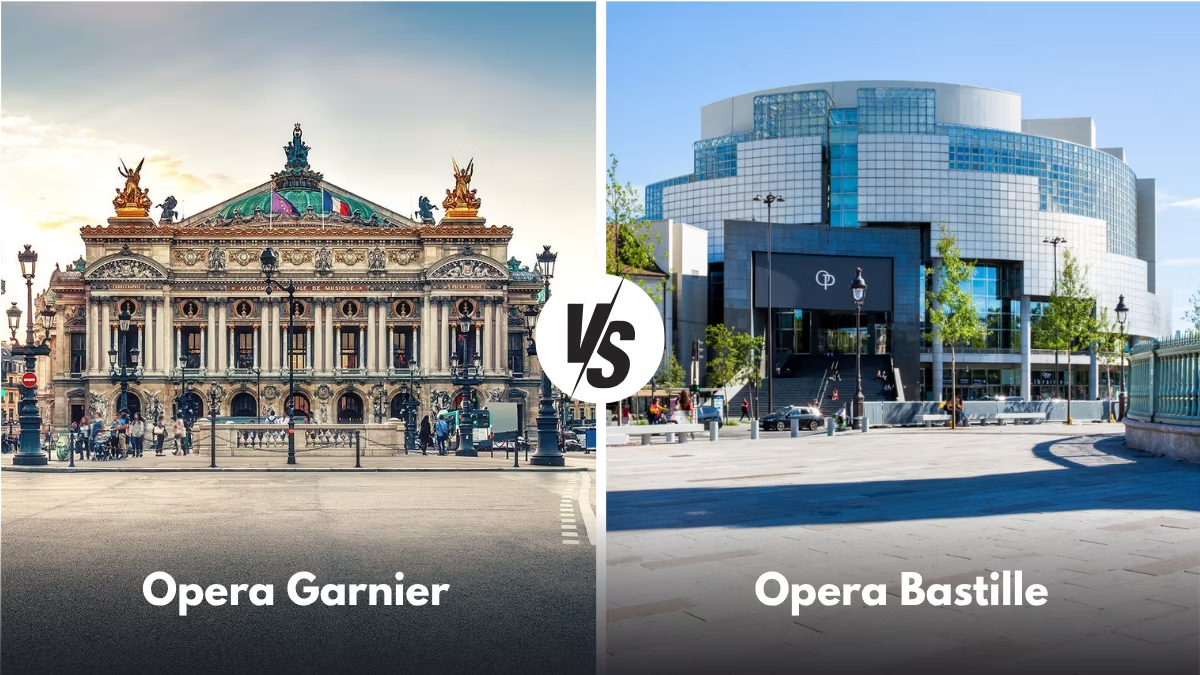
Opera Garnier (Palais Garnier) is the historic 19th-century opera house in the 9th arrondissement — the one tourists visit for the architecture, the Phantom mythology, and the Grand Staircase. Opéra Bastille is the modern 1989 opera house in the 12th arrondissement — the one where most Paris Opera productions now take place. For daytime architectural visits, Opera Garnier is the clear choice. For attending a live opera performance, the Bastille typically has the bigger productions; for ballet, Opera Garnier is the primary venue. Most visitors who attend an evening performance prefer the atmosphere of Opera Garnier, even accepting its smaller scale and less advanced technical facilities.
Paris is one of very few cities in the world that operates two major opera houses simultaneously under the same management. The result is a permanent comparison that visitors, opera-goers, and Parisian cultural commentators have been making since 1989. The comparison is less straightforward than it appears.
The Basics: Two Houses, One Institution
Both Opera Garnier and the Opéra Bastille are operated by the Paris Opera (Opéra national de Paris) as a single institution with a shared artistic director, shared company, and integrated season programming. The two houses are not in competition with each other — they are two venues for the same organisation, with programming allocated between them based on scale, technical requirements, and artistic choice.
Opera Garnier (Palais Garnier):
- Opened: 5 January 1875
- Seating: 1,979
- Location: Place de l’Opéra, 9th arrondissement
- Architect: Charles Garnier
- Primary use: Ballet (Paris Opera Ballet) and selected operas
- Daytime visits: Yes — open to tourists daily
Opéra Bastille:
- Opened: 13 July 1989
- Seating: 2,745 (main auditorium)
- Location: Place de la Bastille, 12th arrondissement
- Architect: Carlos Ott
- Primary use: Main opera programming
- Daytime visits: Limited (guided tours only, less regular)
Architecture: No Contest for the Tourist Visit
Opera Garnier (1875) is one of the most significant 19th-century public buildings in the world — a Beaux-Arts masterpiece with a Grand Staircase, Grand Foyer, Chagall-painted auditorium, and underground lake. Opéra Bastille (1989) is a glass-and-steel modernist building designed for functional opera production rather than architectural spectacle. For a daytime tourist visit, Opera Garnier is the only meaningful choice — the Bastille offers no comparable visitor experience.
The Opéra Bastille was designed by the Canadian architect Carlos Ott, selected in an international competition organised by the Mitterrand government. Ott’s design prioritised technical function: the largest and most sophisticated stage machinery in Europe, a horseshoe auditorium with excellent sight lines from all positions, flexible backstage spaces for complex productions, and accessibility for the broad public audiences that the “opera for all” political brief required.
What it lacks is architectural spectacle. The exterior — a curved glass and stone facade on Place de la Bastille — is respectable modernism but entirely without the decorative programme, the material richness, or the compositional drama of Opera Garnier. The interior public spaces are functional rather than magnificent. There is no equivalent of the Grand Staircase, no Grand Foyer, no Chagall ceiling, no mythology.
For visitors to Paris who want to see one of the great interiors of the 19th century: Opera Garnier. For visitors who want to attend the main programme of Paris Opera productions: primarily the Bastille.
Programming: What’s On Where
Ballet: The Paris Opera Ballet performs primarily at Opera Garnier. The building’s intimate scale, the horseshoe auditorium’s proximity between dancer and audience, and the atmospheric resonance of performing in a building where the company has danced for 150 years make Opera Garnier the preferred ballet venue. Most major Paris Opera Ballet productions are programmed at the Palais Garnier.
Opera: Major opera productions — particularly those requiring the full scale of the Bastille’s technical facilities, large casts, and elaborate staging — are programmed at the Bastille. Selected operas, particularly those that benefit from Opera Garnier’s more intimate scale and period atmosphere, are programmed at the Palais Garnier.
The practical implication: If you want to attend a ballet at Opera Garnier, there are typically 15–20 ballet productions per season. If you want to attend opera at the Bastille, check the Paris Opera’s current season programme. If you want to attend opera at Opera Garnier, the programme is smaller but distinguished.
Atmosphere and Audience Experience
This is where Opera Garnier consistently wins among those who have attended performances at both houses.
Opera Garnier: The experience of attending a performance in the Palais Garnier auditorium is one of the most aesthetically charged available in contemporary classical music culture. The room is beautiful, the acoustic is warm and rounded, the Chagall ceiling is above you, the chandelier is overhead, and the knowledge of the building’s history and mythology pervades everything. Sightlines from the side boxes are partial, and some upper gallery seats have restricted views, but the atmosphere compensates for technical imperfections.
Opéra Bastille: Sight lines are excellent from virtually every seat — a genuine advantage over Opera Garnier’s partial-view boxes. The acoustic is more neutral and technically precise than Opera Garnier’s warmer sound. The stage machinery allows productions of a scale and technical complexity impossible at Opera Garnier. The atmosphere is efficient and comfortable without being particularly memorable.
Most regular Paris Opera-goers have strong views on which house they prefer for the performance experience. The consensus among those who prioritise atmosphere leans Opera Garnier; those who prioritise production quality and sight lines lean Bastille.
Ticket Pricing
Both houses use the same pricing structure through the Paris Opera. Prices range from budget seats (approximately €10–€20 in the upper galleries) to premium seats (€150–€250 for prime orchestra positions at Opera Garnier, higher for premium events). Booking opens six to eight weeks before each performance.
For daytime tourist visits, only Opera Garnier is accessible — the Bastille does not offer equivalent daytime visitor access.
The Political Context
The decision to build the Opéra Bastille was explicitly political. President François Mitterrand announced it as one of his Grands Travaux — a suite of major public building projects including the Louvre Pyramid, the Grande Arche at La Défense, and the Bibliothèque nationale de France. The political brief was explicit: opera was an elitist institution concentrated in the wealthy Right Bank; the new opera house would bring it to the historically working-class 12th arrondissement and charge lower ticket prices than Opera Garnier.
The policy was only partially realised. Ticket prices at the Bastille are not significantly lower than at Opera Garnier. The 12th arrondissement, while not the 9th, has gentrified substantially since 1989. The “opera for all” aspiration has given way to a more conventional artistic programme that differs from Opera Garnier’s in scale and technical ambition rather than social access.
The debate about whether the Bastille was a good use of public money, whether it was the right building, and whether it has achieved its political aims is ongoing among Parisian cultural commentators.
Which Should You Visit?
For a daytime architectural visit: Opera Garnier, without question.
For attending ballet: Opera Garnier — the building was designed for it, the company is primarily based there.
For attending opera: The Bastille for most major productions; Opera Garnier for the atmospheric experience when it is on the programme.
If you can only do one and it’s your first visit to Paris: Opera Garnier — it is one of the most significant buildings in Europe and a daytime visit is available on a standard entry ticket.
If you’re a serious opera-goer planning to attend multiple performances: Both, for different reasons — the Bastille for technical production quality, Opera Garnier for atmosphere.
Frequently Asked Questions
What is the difference between Opera Garnier and Opéra Bastille?
Opera Garnier (1875) is the historic 19th-century Beaux-Arts opera house in the 9th arrondissement, primarily used for ballet and daytime tourist visits. Opéra Bastille (1989) is the modern opera house in the 12th arrondissement, primarily used for major opera productions. Both are operated by the Paris Opera as a single institution.
Which Paris opera house is better?
Opera Garnier offers a superior daytime visitor experience and atmospheric performance environment. Opéra Bastille offers superior technical production facilities and sight lines. Most visitors to Paris for architectural or cultural tourism visit Opera Garnier. Regular opera-goers often prefer the Bastille for main-stage opera productions.
Where does the Paris Opera Ballet perform?
The Paris Opera Ballet performs primarily at Opera Garnier (Palais Garnier). Most major ballet productions in the Paris Opera’s season are programmed at the Palais Garnier, which remains the company’s primary home stage.
Can you visit Opéra Bastille as a tourist?
The Bastille does not offer equivalent daytime visitor access to Opera Garnier. Guided tours of the Bastille are available on selected days — check the Paris Opera website for the current schedule. The tours cover the auditorium, backstage areas, and stage machinery.
Is Opera Garnier worth visiting instead of Opéra Bastille?
For a daytime visit: Opera Garnier offers one of the most extraordinary interior architectural experiences in Europe; the Bastille offers a modernist building of functional quality but no comparable spectacle. For most tourists, Opera Garnier is the clear choice. See our is Opera Garnier worth visiting guide for a full analysis.
